
An Historic Interlude...

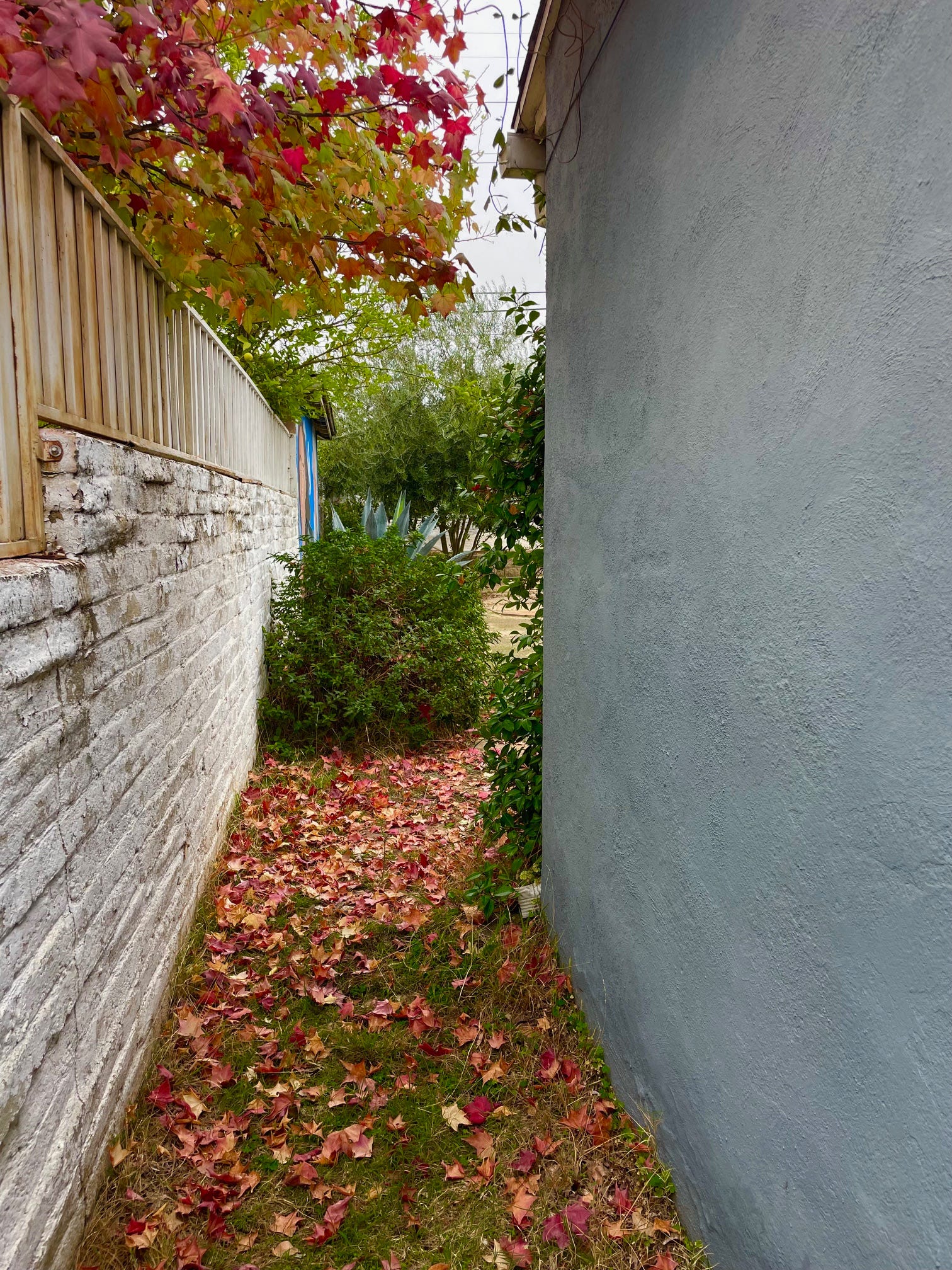
The regular Read. Write. Cook. will be back next month, but it’s November, a month to honor those who have passed, whether you All Saints, Dia de Los Muertos, or simply find yourself more reflective in the darkening days. I love November as the quiet space before the holiday madness. Our days in LA are cooler and here’s a picture of my very California backyard graced by our neighbor’s very east coast liquid amber tree. Now that I see it I realize I gotta paint that fence again.
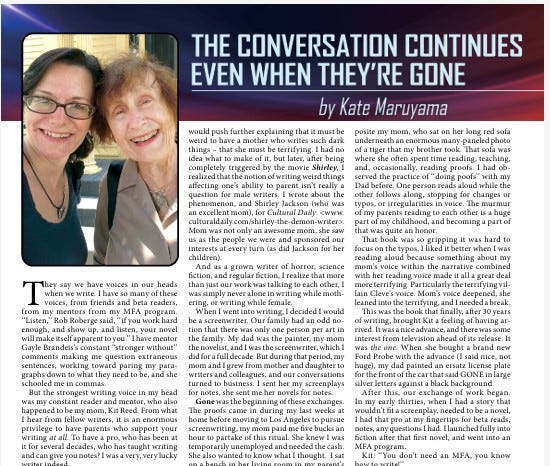
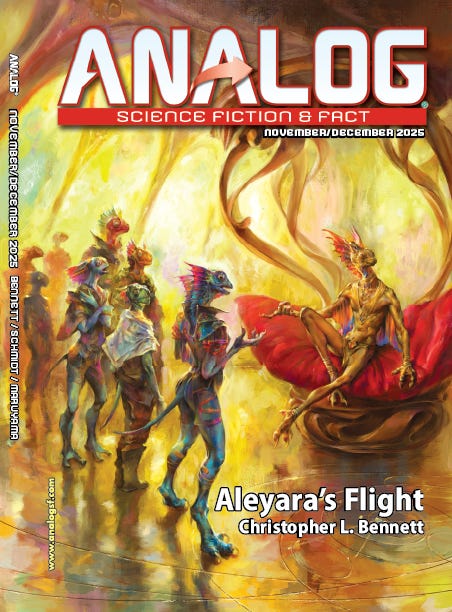
As I proofed my Mom’s book Gone for Silvertail Books, I realized I had to do my best to promote it, and knowing that Mom’s readership lies close in the hearts of genre readers, and these thrillers are downright horror, I pitched an essay about growing up a second generation writer to my mom’s favorite genre mag, Locus Magazine. I received a very swift response that they’d really like such a piece! The thing is, writing around my mom is always rife with the strange world that is grief, as I wrote about in this article for the Analog SF & F Blog. This was an article reflecting on the difficulty writing the aforementioned essay, and my short story “Faith” which, it turns out, wordcountwise, worked out to be a novelette! So, of course it had to be November, these articles I wrote about my mom months apart came out in the same week, and my novelette was published in the October/November Analog!
I know Mom would be tickled by her resurgence (her books are selling better than mine!), and she now has two thrillers out from Silvertail with two more on the way. You can find them here.
Like most writers, self promotion is not my comfort zone, and I’ve had to do a lot of it this year for March’s two! books and this recent slew of publications. In preparation for my realist novel Alterations debut, I wrote some essays which didn’t place.
They were all written with love, so I’ll share my articles on 1930s Hollywood in the coming months, but because it is November, in honor of the ancestors, I want to share this essay I wrote about my great great Aunt Ruth, who gives me hope as we face more adversity, anyone living outside a tiny demographic as the country struggles in the way it’s doing. If Ruth Rich could accomplish and survive what she did in the early 20th century South and come out smiling, there’s hope for all of us. And our queer ancestors need honoring, if for no other reason than proof that families have always been queer.
Crafting Our Own Narratives: We Aren’t Always What They Say We Are.
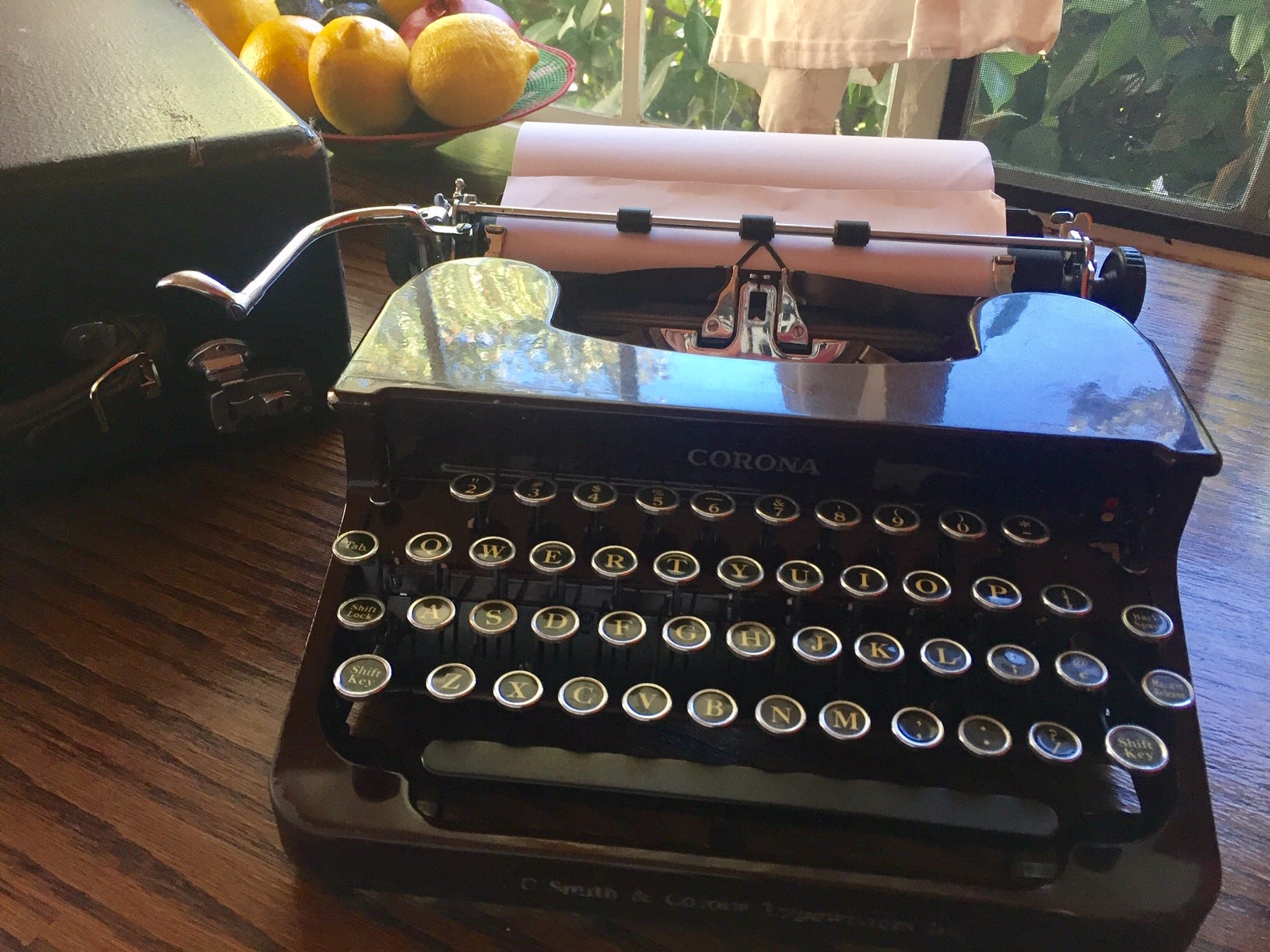
I have this gorgeous typewriter from the early 20th century. It feels a bit magical, because my Mom, a prolific writer, wrote her first novel on it, and I wrote my first novel on it when I was fifteen. It originally belonged to my Mom’s great aunt, Ruth Rich, who, the family story goes, was a newspaper reporter at a time they didn’t let women do those things. She also lived for several decades with her lifelong love, Mary in a time when women weren’t supposed to do those things. I had a general concept of Aunt Ruth as a badass, and I had her solidified in my head as staying with her partner as if nothing was wrong or out of place. My grandfather, as a boy would go by and “do” for Mary and Ruth in Jacksonville Florida, helping them with yard work, garbage, or whatever other household chores needed doing. As Ruth aged, she went blind and needed more assistance.
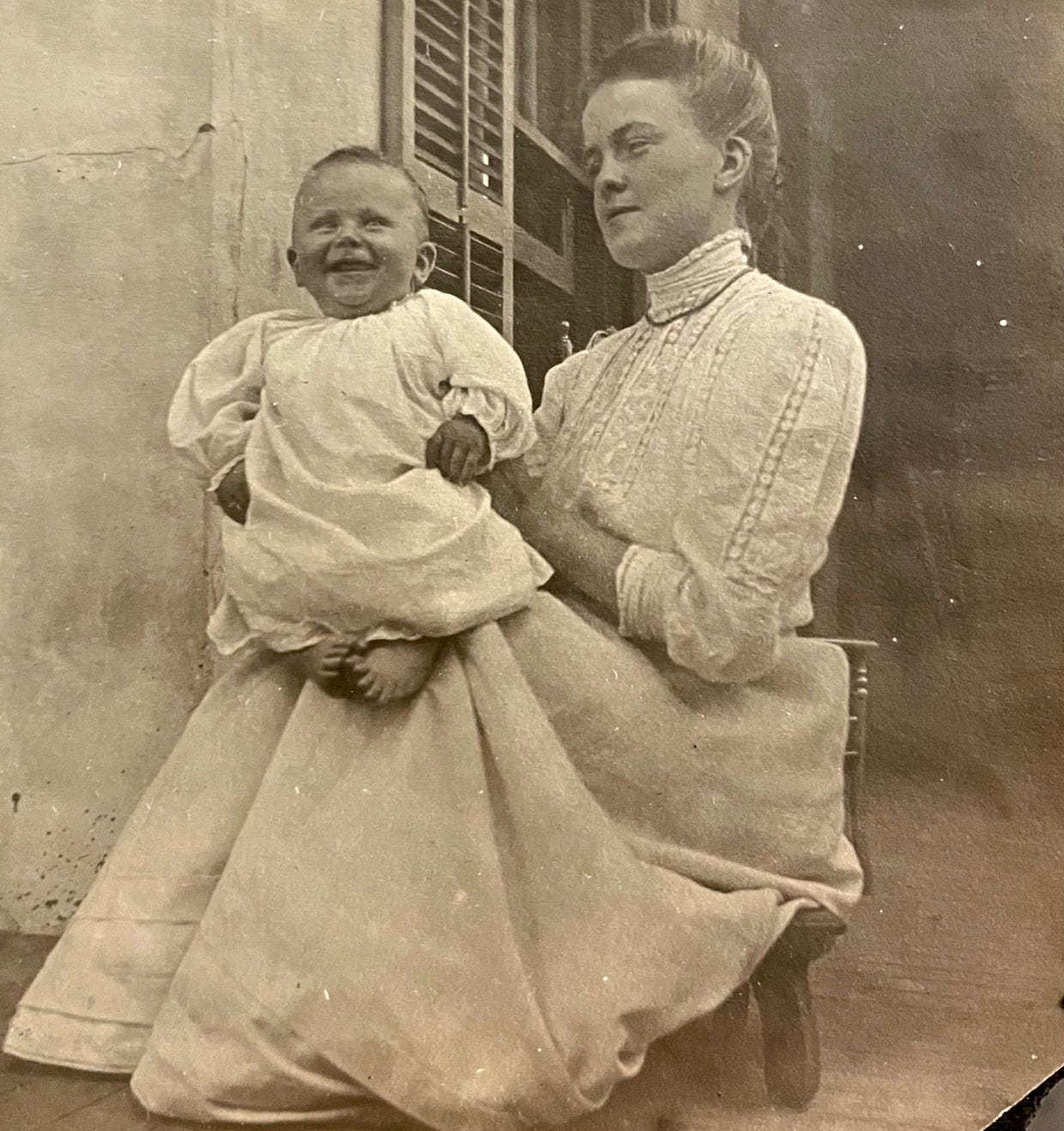
This is a picture of Ruth Rich dandling her nephew Jack (my grandfather) on her lap. Both look quite pleased.
How Ruth’s family thought of this couple, (as best friends or roommates?) is up for debate. Such marriages, called Boston marriages at the time allowed women to live together, thought of as “spinsters” or “roommates” living beneath the radar of homophobia. The pressures that arose for them, I can only imagine, and did imagine, in writing Alterations, (Running Wild Press, March,2025) the story of Adriana and Rose, who lived in such a marriage. In their case, when life and jobs close in on them, Adriana makes decisions that affect three generations of her family.
Fortunately, Ruth and Mary got to live together happily for several decades until Mary died.
In looking for more information on Aunt Ruth (a reporter, where?) I uncovered a truly remarkable badass, beyond the legend of my childhood imagining. Perhaps because she was unfettered by husband and kids, she was a reporter for the Florida Times-Union. Her obit claimed she was “one of the South’s first newspaperwomen.” She covered the society pages –the beat covered by women in newspapers at the time. But in 1924, she became editor of The Independent Woman, a publication created by the National Federation of Business and Professional Women’s Clubs. This organization, meant to support women in business everywhere, is still active today.
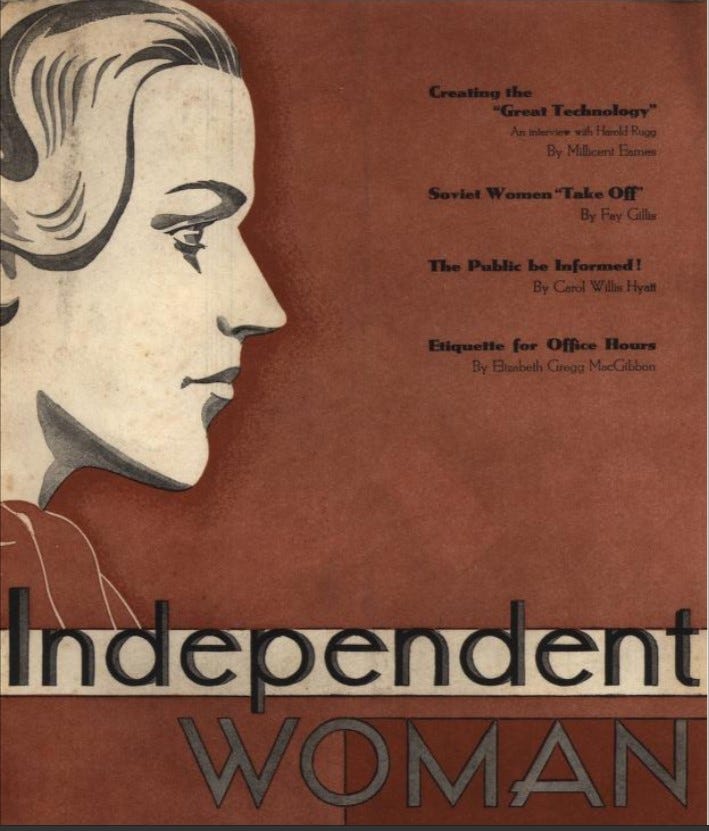
The only copy I could find online was this, and I wonder if Ruth Rich is the coy “editor” who is not mentioned by name, or if she was working simply in copy putting the magazine together. This 1934 edition feels like an antidote to society pages. It contains articles that talk about women pilots in Russia, women in business, and cautioned women to hold off on having kids until their career is established to make sure their family has double the salary. There is a narrative here that goes counter to the larger male narrative of that part of the century.
We are often told larger generalizations about the time before the sexual revolution: how women weren’t allowed to work, how they were only allowed to be married and have kids. When thinking about history, it is best to be wary of these larger narratives. We need to think of who wrote them and to what ends. We also need to think about how informed the writers of those narratives were.
Historians were all white males in those days and were apt to recount all history through their narrow lens. There is always more to an individual story. I’d invite anyone reading to look in their family history to find people who went against the grain, who did their own thing despite prevailing winds. Ask more questions of your women ancestors.
Of late, I’ve found Ruth’s story quite consoling. Here is someone who was likely told daily she couldn’t do certain things, and she went ahead and did exactly what she wanted. Being white, she obviously operated with a certain level of privilege, but she did not carry the benefits of being a man. She was likely not paid like male reporters, and I doubt that she and Mary could be open about their relationship in public. But despite southern, white societal norms, she did what she thought she was capable of and empowered other women, not only through the magazine, but through the Jacksonville Chapter of the National Federation of Business and Professional Women’s Clubs, which she founded. And she lived with the love of her life until death did them part.
My grandmother came out of this era in Florida (and she was also born and raised in Jacksonville) and based on her very vocal disapproval of my mother’s working and writing books, and her disapproval of trousers in general and her backhanded notions about women needing to be quiet, I think the prevalent expectations of women of the period were not those shared by her husband’s aunt. The fact that Ruth could go through her entire (sighted) life as a professional woman, live with the woman she loved, and help numerous women on their professional way gives me hope that whatever way the wind blows, if we maintain our individuality, there is so much we can do.
And this small uncovering of one early 20th century woman’s life makes me question the larger histories we are taught in the U.S.. There are so many generalizations about American “women in the 40s,” or “women in the 50s.” Often those narratives are not only sweeping generalizations about a variety of humans, they only represent a small subsection of women. Being a woman was an individual experience dependent on background, upbringing, race, demographics and, like Aunt Ruth, individual choices. Finding our own family’s nuanced stories can help fill in the blanks on larger narratives we may have been sold over the centuries. And each story is likely a great deal more interesting than the narrow narratives we are sold in history books.
Take this November to ask about your own ancestors. Call up your oldest living relatives, start asking questions. Or, like in my case as they were gone, start doing some research. These stories need telling and they can ensure present day humans are wary about the damaging narratives our country presses upon us daily.
Ruth sounds amazing!
Family is a different thing for me, having never had much (if I've never mentioned it, my mother was orphaned at the age of 3) and having no living blood relatives that I know at this point. For those reasons, notions of "family" tend to just leave me perplexed.